Virtual Receptionist vs. In-House Front Desk Staff: Which Fits Your Practice?
Weighing Your Options for Patient Communication and Support
Every medical practice relies on smooth patient communication. The front desk is often the first point of contact, setting the tone for a patient's entire experience. But as practices grow and patient expectations evolve, the question of how to manage that front-line interaction becomes more complex. Do you hire an in-house receptionist, or do you use a virtual receptionist service? Both approaches have their strengths, and the right choice depends on your practice's size, workflow, and patient volume.
What In-House Front Desk Staff Bring
An in-house receptionist is a familiar presence. They know the providers, the office layout, and the daily rhythm. They can handle walk-in patients, manage the physical sign-in process, and offer a personal touch that many patients appreciate. For a small practice with a steady but manageable patient flow, an in-house staff member can handle appointment scheduling, patient check-in, and basic phone triage without missing a beat.
In-house staff also handle non-phone tasks. They might manage the waiting room, process forms, or assist with EHR scheduling directly. That hands-on presence can be reassuring for patients who prefer face-to-face interaction. However, relying on a single in-house receptionist means that during breaks, lunch, or sick days, the front desk goes quiet. Calls may go to voicemail, and patients can feel frustrated when they cannot reach someone right away.
The Case for a Virtual Receptionist
A virtual receptionist works remotely and handles incoming calls, appointment scheduling, and patient messages through a secure phone system. This model is often part of a broader medical answering service that can provide coverage around the clock. For practices that receive many calls after hours or on weekends, a virtual receptionist ensures that no patient call goes unanswered. Call routing can be set up to direct urgent calls to the provider on call, while routine appointment reminders and non-urgent messages are logged for the next business day.
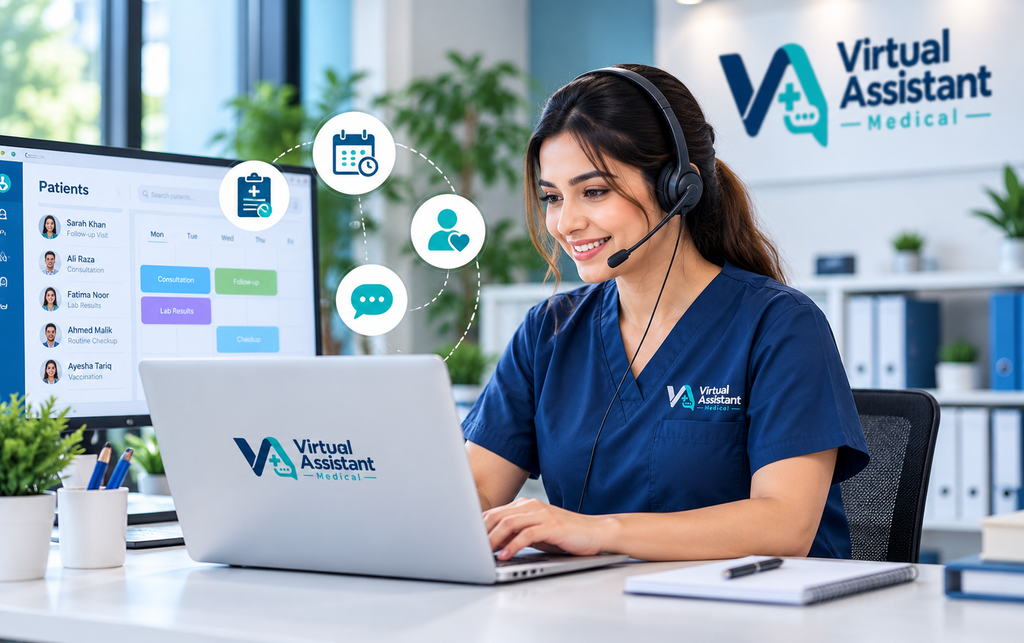
Virtual receptionists can also handle phone triage, helping to sort urgent from non-urgent calls before they reach clinical staff. This can reduce interruptions during patient visits and allow providers to focus on care. For practices with multiple locations, a virtual receptionist can present a unified front, answering calls with a consistent script and routing them appropriately.
Comparing the Two Approaches
Cost and Scalability
An in-house receptionist comes with salary, benefits, paid time off, and training costs. If your practice grows, you may need to add more front desk staff or extend hours, which increases overhead. A virtual receptionist typically operates on a subscription or per-call basis, so costs scale with usage. This can be a more predictable expense, especially for a practice that is still growing or has seasonal fluctuations in patient volume.
Coverage and Availability
In-house staff work a set schedule. Unless you hire multiple people to cover overlapping shifts, your practice is only reachable during those hours. A virtual receptionist can provide after-hours coverage, holiday support, and backup during lunch breaks. This can reduce call abandonment because patients know someone will answer, even if the office is closed.
Patient Experience and Personal Touch
Some patients prefer speaking to someone they know. A familiar voice can build trust and make the practice feel more personal. In-house staff can also notice non-verbal cues and offer immediate help with paperwork or directions. On the other hand, a well-trained virtual receptionist can follow a script that covers common questions, scheduling needs, and emergency protocols. The key is that the virtual service is integrated with the practice's protocols, so the patient does not feel like they are talking to a stranger who cannot help them.
When Each Option Works Best
For a solo practice with a small patient panel and predictable hours, an in-house receptionist may be the simplest solution. The personal relationship with patients is valuable, and the volume of calls is manageable. However, as the practice adds providers or extends hours, the demands on the front desk increase. That is often the point where a virtual receptionist becomes a practical addition.
A hybrid model can also work well. The in-house receptionist handles the front desk during peak hours and manages walk-ins, while a virtual receptionist takes over after hours and during busy periods. This approach gives patients the best of both worlds: a familiar face when they are in the office and a responsive voice when they call outside of regular hours.

For a multi-location practice or a specialty clinic with complex scheduling, a virtual receptionist can help standardize call handling across sites. Phone triage can be managed by trained staff who follow the same protocols, reducing errors and ensuring that urgent calls are escalated consistently.
What to Look for in a Medical Answering Service
If you decide that a virtual receptionist is the right fit, you want a service that understands healthcare. A general answering service may not handle patient confidentiality or medical terminology well. You need a medical answering service that is trained in HIPAA compliance, phone triage, and appointment scheduling. The service should integrate with your EHR scheduling system so that appointments are updated in real time and patient messages are recorded accurately.
Look for a service that offers clear reporting. You want to know how many calls were handled, how many were escalated, and whether any calls were abandoned. This data helps you monitor patient satisfaction and adjust your coverage as needed.
Making the Decision
Start by mapping your current call volume and the times when calls come in. If you see a pattern of missed calls after 5 p.m. or during lunch, a virtual receptionist could fill that gap. If your front desk staff is constantly overwhelmed during the day, a virtual receptionist can handle overflow so that patients do not wait on hold for long periods.
Also consider your practice's growth plans. If you expect to add providers or open new locations, a virtual receptionist can scale with you without the need to recruit and train additional in-house staff. On the other hand, if your practice is small and your patients strongly prefer the personal touch, an in-house receptionist may be the better investment.

There is no one-size-fits-all answer. Many practices find that a combination of in-house staff and a virtual receptionist gives them the flexibility they need. The in-house person manages the physical front desk and builds patient relationships, while the virtual service ensures that every call is answered and every patient message is captured.
Final Considerations
The decision ultimately comes down to what your patients need and what your practice can sustain. An in-house receptionist offers a personal connection that is hard to replicate remotely. A virtual receptionist offers reliability, scalability, and after-hours coverage that a single staff member cannot match. By comparing your practice's call patterns, budget, and patient expectations, you can find the approach that keeps your front desk running smoothly and your patients satisfied.